By early November, most docks on southern Georgian Bay are out of the water, but plenty of owners are still looking at theirs and wondering if it can just stay put. Sometimes it can. Often it shouldn’t. Here is how ice actually damages docks, which kinds of docks have a fighting chance over winter, and what to check if yours is staying in around Penetanguishene, Tay Township and Midland.
Why ice is so hard on docks
Ice does damage in three main ways, and most dock failures come from a mix of them.
- Expansion. As ice forms and thickens, it pushes sideways. On a cold, clear night, a sheet of ice can shove against posts, cribs and frames with a lot of force. Anything rigid that stands in its way takes the load.
- Lifting, or ice jacking. Ice grips posts and pipe legs. When water levels rise or the ice heaves, it lifts the legs a little at a time. Over a winter, a pipe dock can be pulled partly out of the lakebed and left tilted or twisted at ice-out.
- Moving ice in spring. Breakup is often the worst part. Wind pushes loose ice sheets along the shore, and they can bulldoze anything in their path. Exposed shorelines facing open water get the most of this.
How bad it gets depends on your shoreline. A dock in a sheltered back bay with little wind and steady water levels sees much less force than one on an open stretch facing the main bay.
Which docks can stay in and which should come out
There is no single answer, but some general patterns hold.
| Dock type | Leave in over winter? | Main concern |
|---|---|---|
| Pipe or post dock | Usually no | Ice jacking lifts and bends legs |
| Sectional or roll-in dock | Usually no | Designed to come out; frames bend under ice |
| Floating dock | Sometimes, if moved or protected | Ice crushes floats and strains anchors and hinges |
| Permanent crib dock | Built to stay | Ice can shift cribs and loosen decking |
| Boat lift | Almost always out | Legs and cradle are easily bent by ice |
Pipe docks and roll-in docks are designed to be removed. Leaving them in is the most common reason owners face a repair bill in May. Floating docks can sometimes stay in sheltered water if they are pulled away from the shore or swung into a protected spot, but they still take a beating from moving ice. Permanent crib docks are built to stay year-round, though they also shift over time.
If you’re not sure what kind of dock you have, or it’s a mix of sections added over the years, it’s worth having someone look at it before the freeze. If you’re weighing a switch for next year, floating docks handle changing water levels differently from pipe docks, though they still need a plan for winter.
Is it too late to take the dock out?
In early November, often not. Removal gets harder as the water gets colder and the days shorten, but many docks can still come out until ice starts forming along the shore. Once skim ice sets in, removal becomes slow, cold and riskier for anyone working in the water.
If you’re on the fence, booking dock removal now is usually the safer bet. The cost of a late removal is almost always lower than replacing bent legs, cracked floats or a section that went missing at ice-out.
If the dock is staying in: what to do now
If your dock is a permanent structure, or you’ve decided the risk is acceptable, a bit of preparation helps.
Lighten and clear it
- Remove benches, ladders, bumpers, boat lifts, solar lights and anything else that can be removed.
- Take off any removable sections that sit in the most exposed spot.
- Pull boats, kayaks and lifts well up on shore.
Check the hardware
- Look for loose bolts, cracked brackets and worn hinges, especially on floating sections.
- Check anchor chains and cables for wear. A failed anchor in spring can let a floating dock drift.
- Note any posts that are already leaning. They will likely lean more by spring.
If you find damage, it’s easier to sort out with dock repair before winter than to work around it in spring, when everyone is busy with installations.
Move or slacken floating docks
For floating docks, many owners swing sections closer to shore, into a sheltered corner, or away from the most exposed water. Slackening anchor lines slightly can let a floating dock ride up with the ice rather than being pinned. The right approach depends on your dock and anchoring system, so check the manufacturer’s guidance if you have it.
Bubblers and de-icers: useful, but with real safety concerns
A bubbler or de-icer keeps a patch of open water around a dock by moving warmer water from below up to the surface. Many owners use them to protect permanent docks and boathouses.
They work well when set up properly, but they create open water and thin ice in places where people may not expect it. Snowmobilers, skaters, ice fishers and pets can travel along shorelines in winter, and thin ice near a dock is a serious hazard.
If you use one:
- Keep the open area as small as it needs to be. Use a thermostat or timer so it only runs when needed.
- Aim it at the dock, not out into the bay.
- Post clear, visible warning signs on shore and on the dock.
- Check it after storms and power outages.
- Ask your township whether it has rules on de-icers. Some Ontario municipalities have started regulating them, so it’s worth checking rather than assuming.
Local notes for Penetang, Tay and Midland
The shorelines around Penetanguishene, Tay Township and Midland vary a lot from one property to the next.
Penetang Bay is long and sheltered, and many docks near the head of the bay see less wind-driven ice than those closer to open Georgian Bay. Cottages along the outer shore and on the Penetang Peninsula face more exposure.
In Tay Township, the shallow bays around Victoria Harbour, Port McNicoll, Waubaushene and Sturgeon Bay freeze early and can hold ice well into spring. Shallow water and older dock setups make ice jacking a real concern, especially on older pipe docks.
In Midland, docks around Midland Bay and Little Lake each have their own patterns. Little Lake is a smaller, more sheltered body of water, while Midland Bay is more open to wind.
If you’re unsure how your spot behaves in winter, neighbours who have been on the same shoreline for years are often the best source. If their docks come out every fall, there’s usually a reason.
Spring: what to look for at ice-out
Whether your dock stayed in or came out, a spring check is worth doing.
- Look at it from shore before stepping on it. Check for tilting, gaps and missing sections.
- Check posts and legs for lifting or bending.
- Look at floats and frames for cracks or crushing.
- Check anchors, chains and cables.
- Book any repairs early, before the spring installation rush starts.
Quick answers
Can I leave my dock in the water over winter on Georgian Bay?
Some docks can, mainly permanent crib docks and some floating docks in sheltered water. Pipe docks, roll-in docks and boat lifts are designed to come out, and leaving them in often leads to bent legs and damaged frames at ice-out.
Is it too late to take my dock out in November?
Often not. Many docks can still come out until ice starts forming along the shore. Once skim ice sets in, removal gets slower and riskier, so if you’re thinking about it, book soon.
Are dock bubblers safe?
They protect docks well, but they create open water and thin ice that can be dangerous for people and pets on the ice. Keep the open area small, use a thermostat or timer, post warning signs and check whether your township has rules on de-icers.
Related services
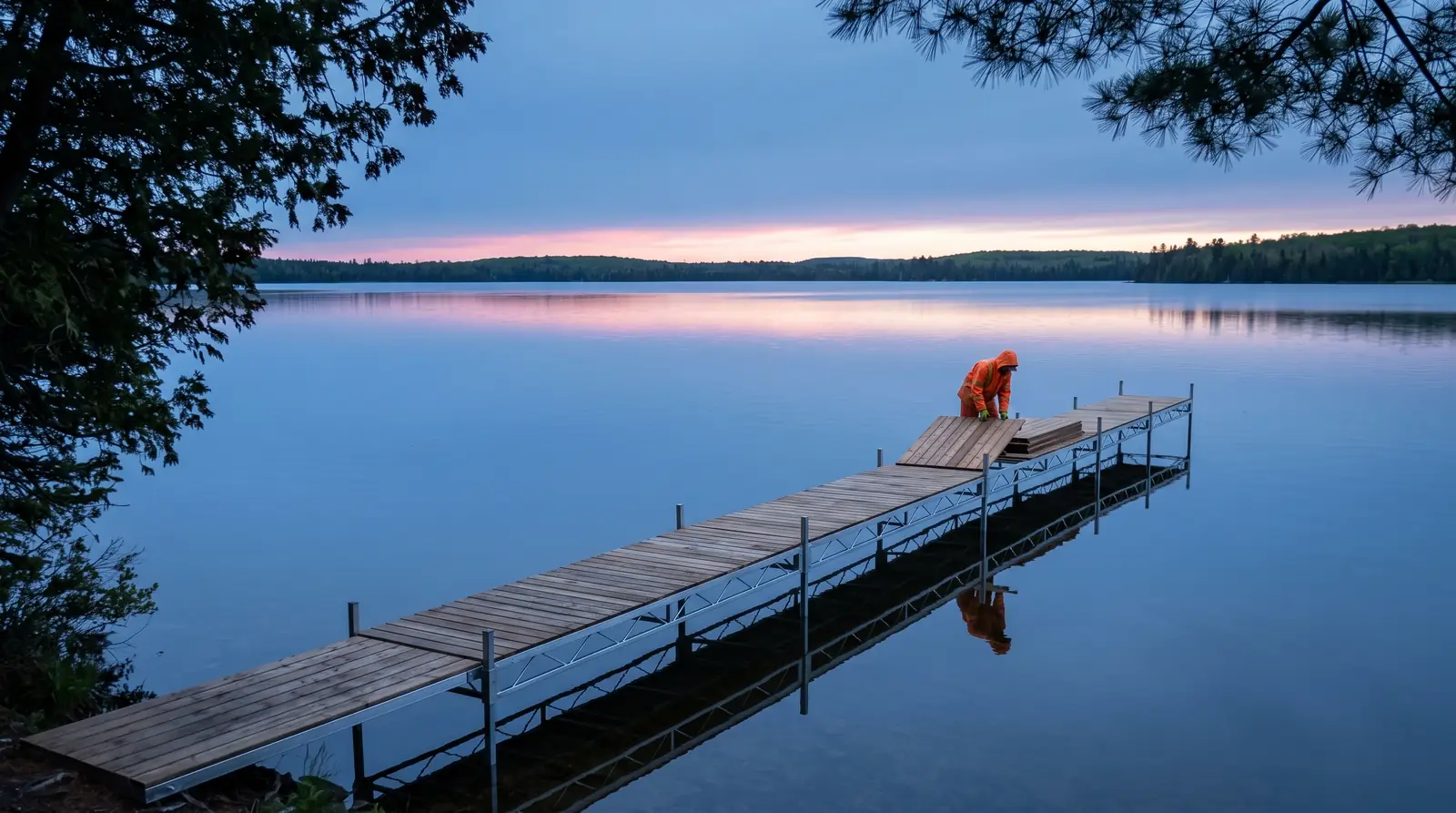 Fall dock removalSections, legs and hardware pulled, labelled and stored above the ice line so spring goes back fast.
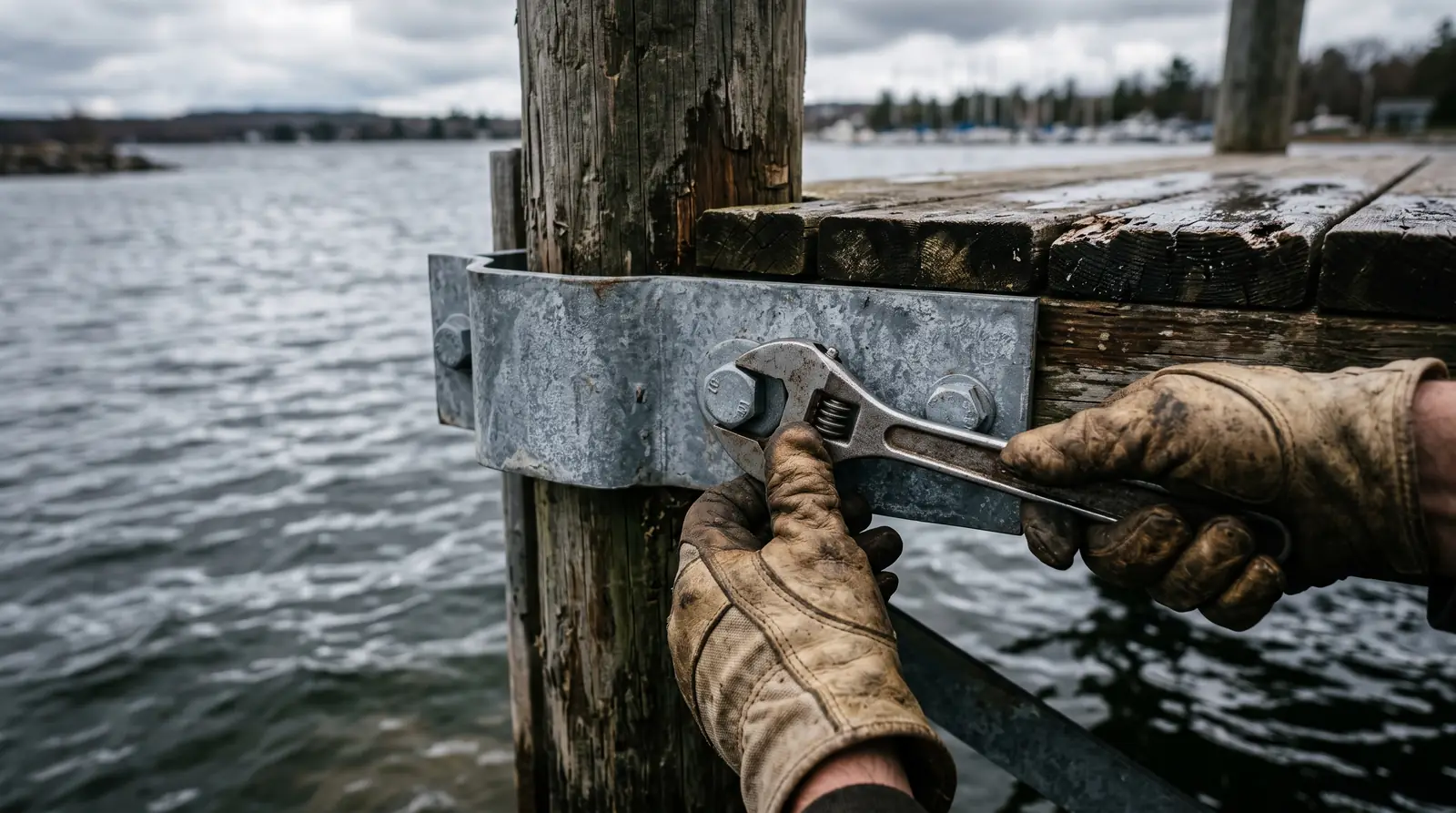 Dock repairLoose brackets, rotten boards, bent legs and storm damage fixed before they get worse.
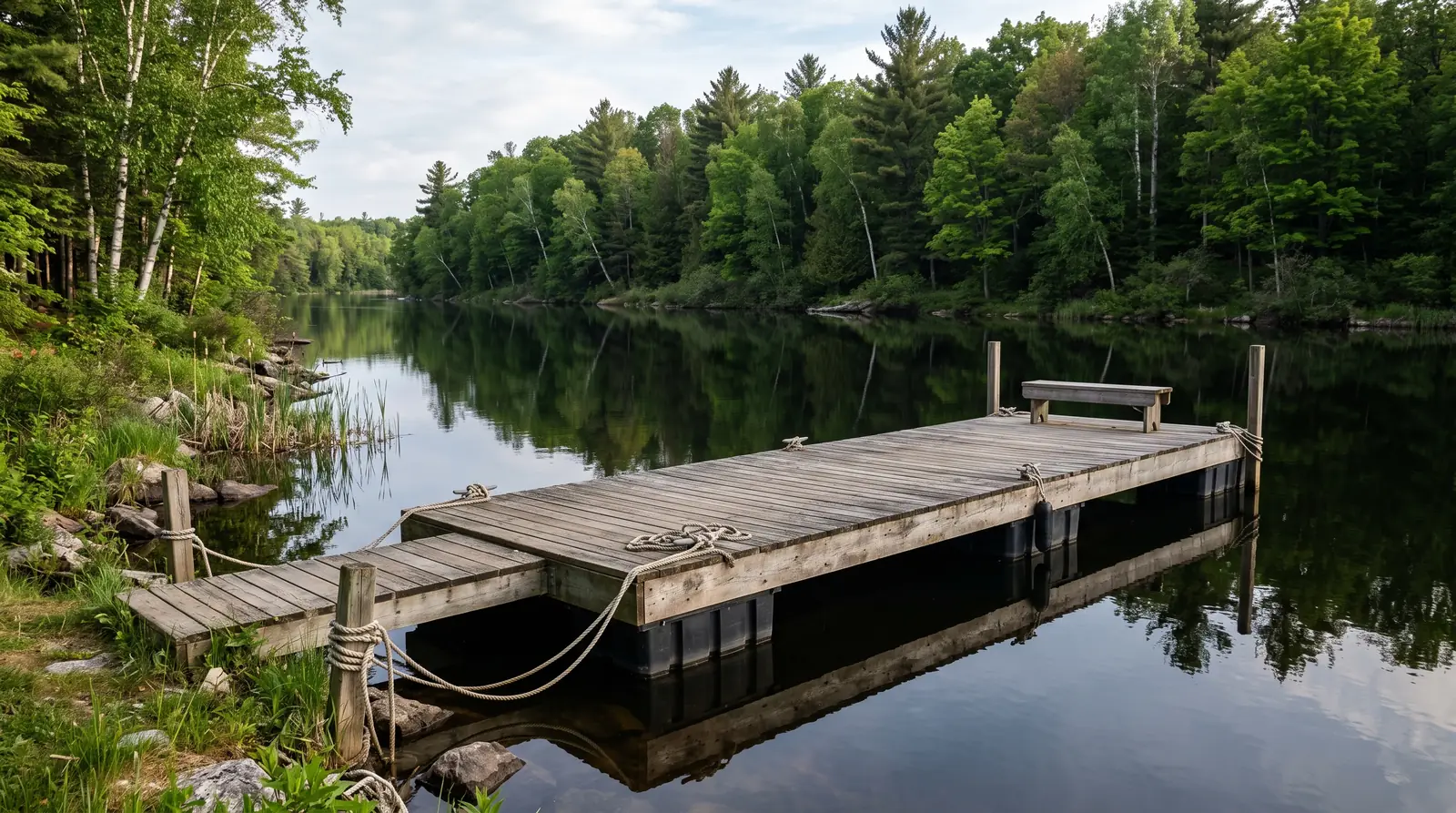 Floating docksInstallation, anchoring and seasonal moves for floating docks and swim rafts.