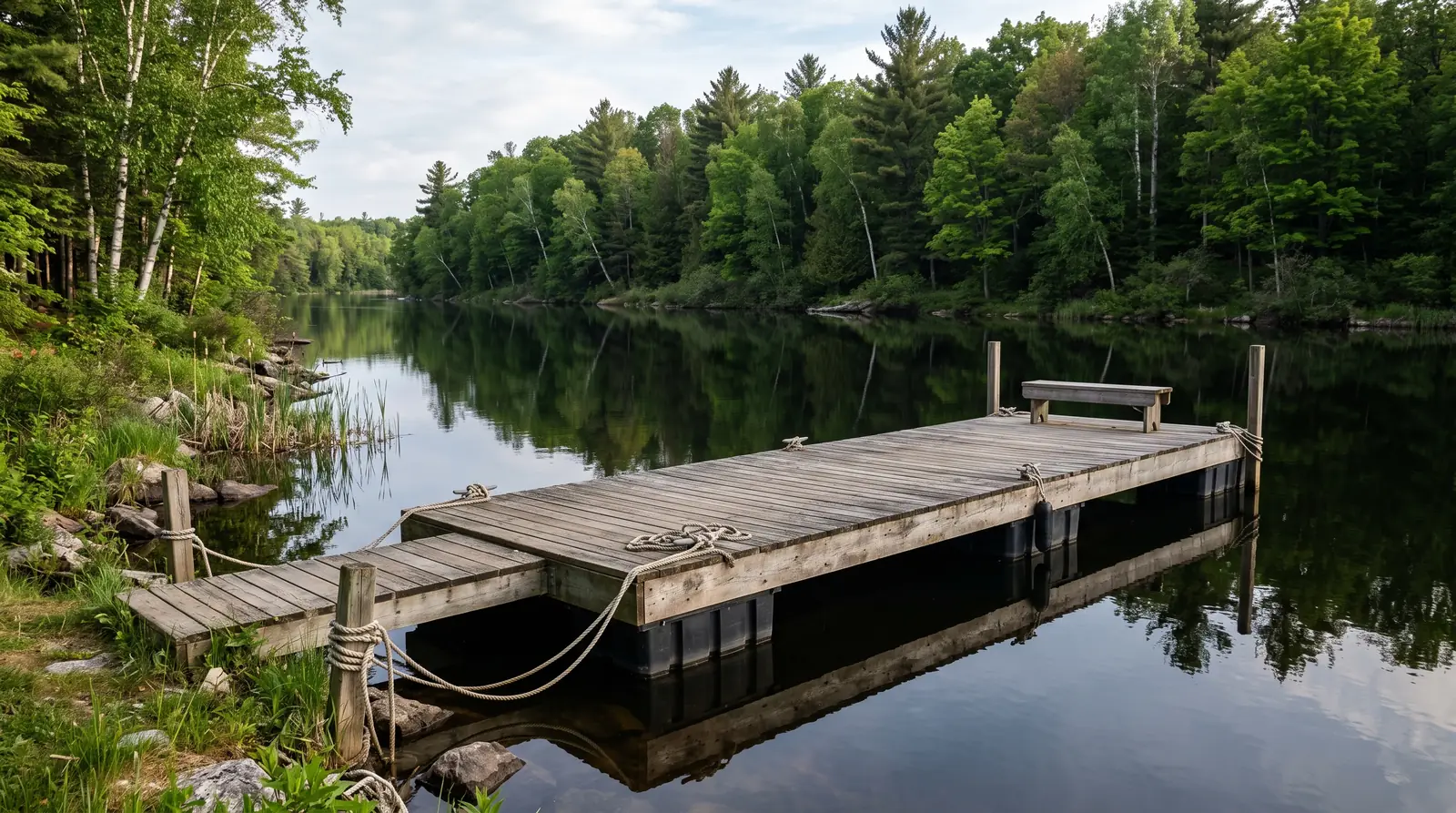
Winter is when a lot of waterfront owners on southern Georgian Bay start planning a new dock, a bigger one, or a replacement for one that’s tired. Before anything gets ordered or built, it’s worth finding out which approvals apply to your shoreline. The answer depends on the type of dock, where it sits and which township you’re in, and the rules have been changing in some places.
This guide explains who to check with, what usually matters, and how to plan so a new dock can go in on time next spring in Tiny Township, Tay Township, Penetanguishene, Midland and nearby.
Why the answer isn’t the same for everyone
There isn’t one dock permit that covers all of Georgian Bay. Up to three levels of government can have a say:
- The province, for work on shore lands and lake beds
- Your municipality, through zoning, shoreline by-laws and building rules
- Federal agencies, mainly for fish habitat and navigation
Whether any of them needs to approve your project depends on the size and type of dock, whether it touches the lake bed, and where your property is. That’s why two neighbours can get different answers.
The provincial side: shore lands
In Ontario, the beds of most lakes, including Georgian Bay, are generally Crown land, managed by the province. The province’s work permit rules cover building structures on shore lands, which includes land covered by water.
According to the Ontario government’s guidance on Crown land and shore land work permits:
- A permit is needed for a structure, or a combination of structures, that is in physical contact with more than 15 square metres of shore lands.
- Structures in contact with 15 square metres or less may not need a permit, as long as they meet the conditions in the regulation.
- A structure floating on the water above shore lands is not considered to be in physical contact with the shore lands.
In plain terms, the footprint that touches the lake bed is what counts. A pipe dock’s legs, a crib dock’s cribs and a permanent structure’s supports all touch the bottom. A floating dock mostly doesn’t, except for its anchors and the ramp landing. The exact conditions are in the regulation, so read the current version or ask the province before you build.
The province’s guidance also makes a point that catches people out: a permit from a municipality or conservation authority does not exempt you from a provincial one, if one is needed. Each level is separate.
The municipal side: township rules
Municipal rules vary a lot across the Georgian Bay shoreline.
Tiny Township
Tiny has been working on shoreline rules for several years. In May 2025 the township passed new shoreline by-laws with a permit process for work near the Georgian Bay shoreline. In June 2025 the township announced that the new permit process was on hold because one of the by-laws had been appealed to the Ontario Land Tribunal, and that an interim control by-law stayed in effect during the appeal.
Because that process may have moved on since, contact the Township of Tiny directly before planning any new dock or shoreline work. Ask what applies to your property today, not what applied to a neighbour a few years ago. See dock services in Tiny Township for local planning notes.
Tay Township
Tay has historically had lighter rules for docks, mainly setbacks from property lines, and has discussed whether to bring in a dock by-law. Check with the township before you build, especially if you’re planning a long or wide dock. See dock services in Tay Township.
Penetanguishene and Midland
Both towns have their own zoning and building rules, and waterfront lots can come with extra conditions. A quick call to the planning or building department before you finalise a design is the simplest way to avoid surprises.
Other questions to ask your township
- Are there limits on dock length, width, or the number of docks per lot?
- What setbacks apply from the side lot lines?
- Does a boathouse, deck on the dock, roof or boat lift change anything?
- Is a building permit needed for any part of the project?
The federal side: fish habitat and navigation
Fisheries and Oceans Canada (DFO) has guidance for projects near water. Many small docks don’t need a formal review, but the guidance lists what to avoid and when to ask for one, so it’s worth reading before work that touches the lake bed or shoreline.
Navigation can also come into play for larger structures or ones that extend well into the water. Most standard residential docks are fine, but a very long dock or one in a busy channel is worth asking about.
Repairs vs replacement
A lot of owners ask whether replacing a dock “like for like” needs any approval. Sometimes it doesn’t, but not always. Rules can treat a full replacement, a larger dock or a change in type (say, crib to pipe) differently from routine dock repair such as swapping boards or brackets.
If you’re changing the footprint, the type of dock or how it’s anchored, check first. If you’re replacing boards on the same frame, it’s usually far simpler, but your township can confirm.
Why a floating dock is often easier to approve
Because a floating dock sits on the water instead of on posts or cribs, it often has a smaller footprint on the lake bed. It’s also easier to remove each fall, which avoids much of the ice damage that hits fixed docks on Georgian Bay.
That doesn’t mean a floating dock never needs approval. Anchors, ramps, shore landings and municipal size limits still apply. But if you’re stuck between options, the approvals picture is one more thing to weigh. Our page on floating docks covers the other trade-offs.
A winter planning timeline
If you want a new dock in the water next spring, here’s a realistic order of steps:
- December to January: Decide what you want (type, size, layout, boat lift or not). Take photos and measurements of the shoreline.
- January to February: Contact your township and, if needed, the province. Ask what approvals apply and how long they usually take.
- February to March: Book spring dock installation. Installers fill their calendars early.
- After ice-out: Installation once the water is workable, usually three to four weeks after the ice goes out on southern Georgian Bay.
If an approval takes longer than expected, you can still put your existing dock back in for the season and do the new one later.
What to have ready when you call
- Your property address and roll number
- A simple sketch showing the shoreline, lot lines and where the dock would go
- Dock type, length and width
- Whether anything touches the lake bed (posts, cribs, anchors)
- Photos of the shoreline and any existing dock
- Any extras, like a boat lift, boathouse or deck area
Having this ready makes the conversation much shorter and the answer much clearer.
Quick answers
Do I need a permit to put in a dock on Georgian Bay?
It depends. The province generally requires a work permit for structures touching more than 15 square metres of shore lands, and floating structures are not considered in contact with them. Your township may have its own rules, and federal fish habitat guidance can apply too. Check with your township and the province before you build.
Does a floating dock need a permit?
Sometimes not from the province, because a structure floating above shore lands isn’t considered to be in contact with them. Anchors, ramps and municipal size or setback rules still apply, so confirm with your township before ordering.
When should I start planning a new dock for next spring?
Start in winter. Sort out the design and approvals in January and February, then book installation by March. Installation on southern Georgian Bay usually happens three to four weeks after ice-out.
 Spring dock installation
 Waterfront upgrades