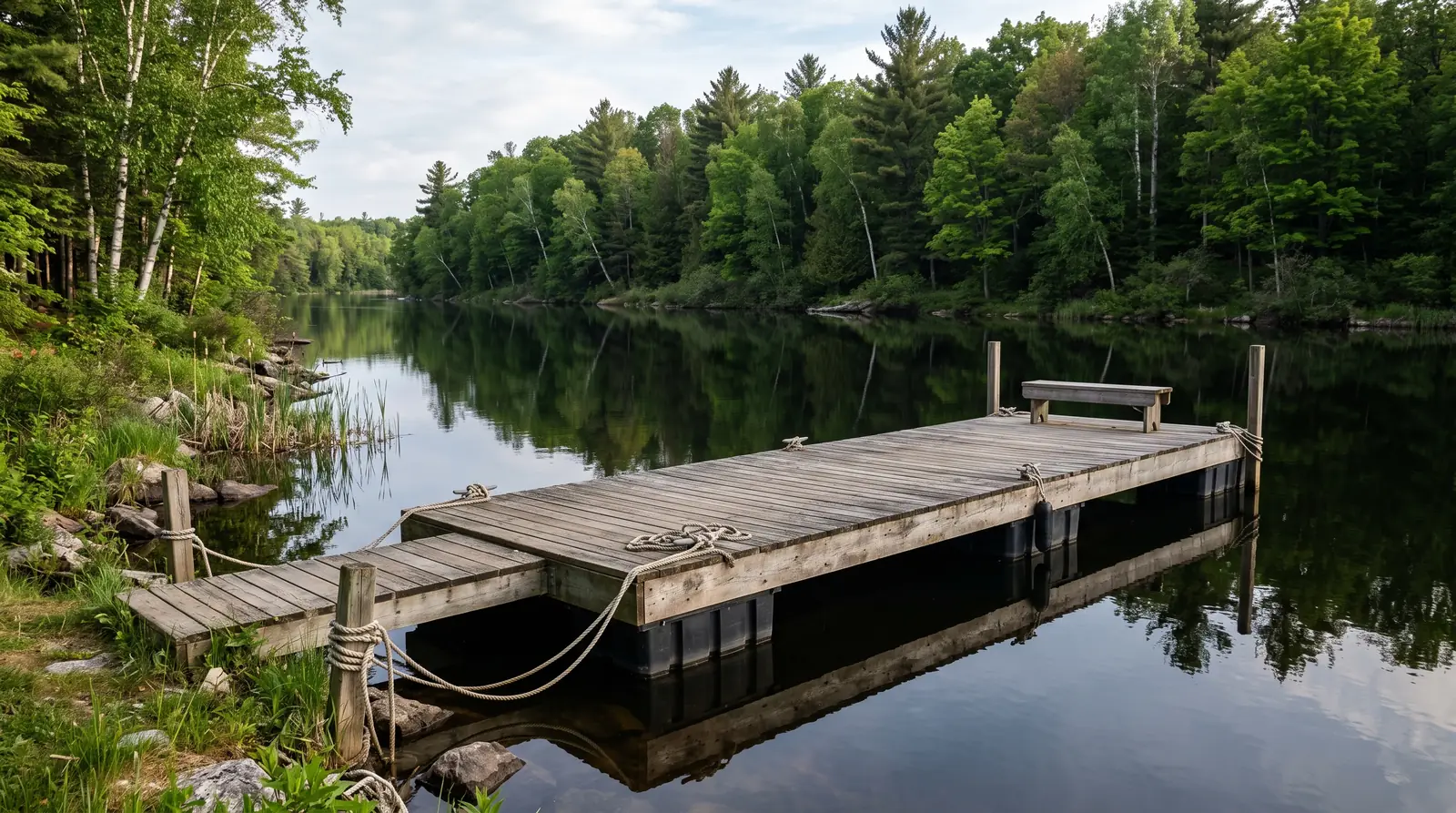
Late fall is when a lot of Georgian Bay waterfront owners start thinking about a new dock. The old one just came out of the water, the problems are fresh in your mind, and there is all winter to plan. One of the first questions is whether to go with a floating dock or a pipe dock. Here is how the two compare on the kinds of shorelines you find around Wasaga Beach, Tiny Township and Tay.
The short answer
There is no single best dock for Georgian Bay. The right choice depends mostly on three things at your shoreline:
- Water depth at the end of where the dock will sit
- The bottom: sand, gravel, rock or soft muck
- How much the water level and waves change over a season
As a rough rule, pipe docks (also called leg or post docks) suit shallow, firm, fairly calm shorelines. Floating docks suit deeper water, soft or rocky bottoms and spots where water levels move around. Many waterfronts end up with a mix: a short fixed section near shore and a floating section further out.
How a pipe dock works
A pipe dock sits on metal legs that rest on the bottom, usually on foot pads. The deck stays at a fixed height above the water. Sections are typically lightweight and built to go in each spring and come out each fall.
Where pipe docks work well
- Shallow, gradually sloping sandy beaches, like much of the Wasaga Beach shoreline
- Firm sand or gravel bottoms where the legs won’t sink
- Spots where you want a stable, level deck that doesn’t move when you step on it
Where they struggle
- Deep water. The legs get long, and long legs get wobbly and harder to install.
- Soft bottoms. Legs can settle unevenly into muck, leaving a sloped deck.
- Changing water levels. If the bay rises or drops through the season, the deck can end up too high or too close to the water. Legs can be adjusted, but someone has to get in the water to do it.
- Rock. Uneven rock makes it hard to get every leg sitting solid.
How a floating dock works
A floating dock sits on sealed floats, usually tied to shore with a ramp or hinged gangway and held in place with anchors, chains or posts. The deck rises and falls with the water.
Where floating docks work well
- Deeper water close to shore, which is common along parts of Tiny Township and Tay
- Rocky or soft bottoms where legs would be a problem
- Shorelines where water levels change through the season, since the deck stays the same height above the water
- Boat owners who want a consistent step-down height from the dock to the boat
Where they struggle
- Very shallow water. Floats need enough depth to stay off the bottom, even when levels drop.
- Rough, exposed water. A floating dock moves with waves. On an exposed stretch facing the open bay, that can mean a bouncy deck and more stress on the anchoring.
- Ramp angle. If the water level drops a lot, the ramp from shore gets steeper.
Side by side
| Pipe dock | Floating dock | |
|---|---|---|
| Best water depth | Shallow | Moderate to deep |
| Best bottom | Firm sand or gravel | Rock, soft bottom, or deep sand |
| Changing water levels | Needs leg adjustments | Rises and falls on its own |
| Feel underfoot | Solid and level | Some movement in waves |
| Seasonal removal | Usually comes out every fall | Often comes out, or sections are pulled to shore |
| Common use | Swimming, lounging, small boats | Boat mooring, deeper water access |
Shoreline questions to answer first
Before you price out either type, it helps to know your own waterfront. A dock installer will usually ask about these:
- How deep is the water at 10, 20 and 30 feet out? Measure on a calm day.
- What is the bottom like? Sand, gravel, flat rock, boulders or soft muck. Wade out or look from a boat.
- How exposed is the shoreline? Does it face the open bay, or is it in a sheltered cove?
- What will the dock be used for? Swimming, sitting, a canoe, or tying up a boat. The size and weight of the boat matters.
- How will it come out each fall? Think about where the sections will be stored, and how they get there.
If you had a dock this year, bent legs, cracked floats or a deck that kept going out of level all point to what didn’t suit the site.
Ice, winter and storage
On Georgian Bay, most seasonal docks of either type come out before winter. Ice can lift legs, crush floats and pull anchors out of place. Our guide on when to take your dock out covers timing in more detail.
When you choose a new dock, think about the fall as much as the summer:
- Pipe dock sections are usually lighter and break down into smaller pieces. They’re often easier to carry up a beach and stack.
- Floating dock sections can be heavy and bulky. Some owners pull them up onto shore, others have them towed and stored. Ask how it will be removed before you buy.
- Storage space. Make sure you have a spot above the high-water and ice line to store the sections over winter.
Professional dock removal and dock installation crews handle both types, but the amount of work, and the price, depends a lot on size, weight and access.
Permits and shoreline rules
Rules for docks in Ontario depend on where you are and who owns the shoreline and lakebed. Some docks need no approval, others need a permit from the municipality, the province or another agency. It depends on the size, the type of structure and the location.
Before a new or larger dock goes in, check with your township and ask your installer what approvals they normally see in your area. Don’t assume a dock that was fine at a neighbour’s place automatically applies to yours.
Upkeep over the years
Both types need some attention, just different kinds.
Pipe docks:
- Check legs and foot pads each spring and fall for bends and corrosion
- Re-level the deck after it’s installed and after big water level changes
- Tighten brackets and replace worn hardware
Floating docks:
- Check floats for cracks, waterlogging or damage from ice and debris
- Check anchors, chains and connections for wear
- Watch the hinge or ramp connection to shore, which takes a lot of stress
The fall dock inspection checklist works for either type.
Mixing and upgrading
You don’t always have to replace the whole dock. A common fix is adding a floating section to the end of an existing pipe dock to reach deeper water. See dock upgrades and floating docks for what’s commonly done.
Local things worth knowing
- Wasaga Beach: much of the shoreline is long, shallow sand, which is where pipe docks are most common. If you want to moor a bigger boat, you may need to go out quite far to reach usable depth. See the Wasaga Beach area page.
- Tiny Township: shorelines vary a lot, from sandy beaches to rockier stretches and deeper bays. Two properties a short walk apart can need completely different docks. See the Tiny Township area page.
- Tay Township: sheltered bays and shorelines near Victoria Harbour and Port McNicoll can suit floating docks well, especially for boat owners. See the Tay Township area page.
Quick answers
Is a floating dock or pipe dock better for Georgian Bay?
It depends on your shoreline. Pipe docks suit shallow, firm, sheltered water. Floating docks suit deeper water, rocky or soft bottoms and changing water levels. Many owners use a combination.
Do floating docks have to come out for the winter?
On most of Georgian Bay, yes, or at least they need to be moved somewhere safe from ice. Ice can damage floats and pull anchors loose. Ask how a floating dock will be removed and stored before you buy it.
When should I plan a new dock?
Fall and winter are good times to plan, since you can see what went wrong with the old dock. Booking early in the new year gives you a better chance at a spring installation date shortly after ice-out.
 Spring dock installation
 Waterfront upgrades