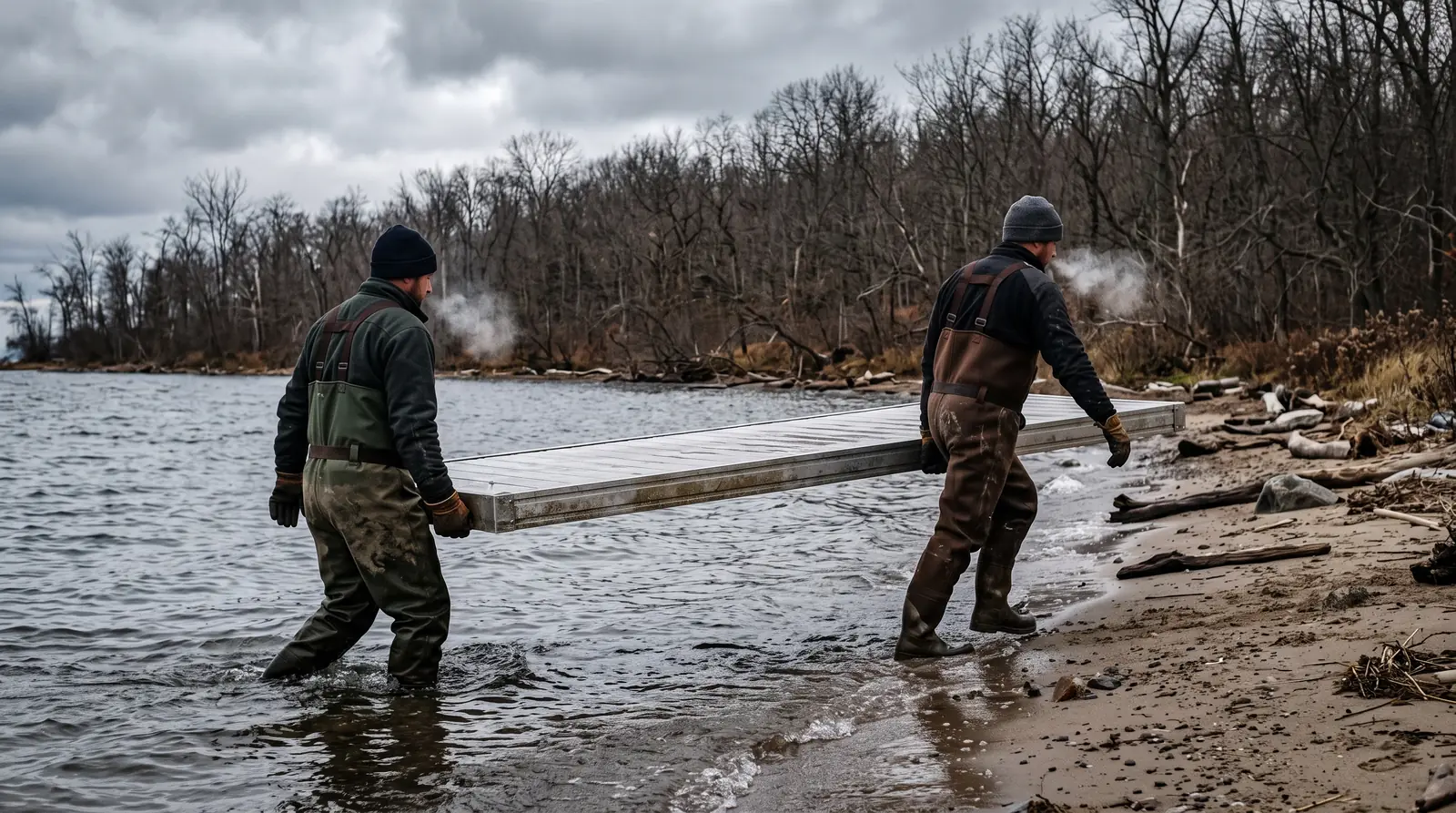
On Georgian Bay, the question is not really whether to take your dock out for winter, but when. Pull it too early and you lose some of the best fall days on the water. Leave it too late and you are standing waist-deep in very cold water, or hoping the ice is gentle this year. Here is how to time dock removal in Wasaga Beach, Tiny Township and Collingwood, and how to get ready for it.
The short answer: late September to mid-October
For most seasonal docks on southern Georgian Bay, the sweet spot is late September to mid-October. The water is still workable, crews have more open dates, and you have had most of the fall use you are going to get.
Crews keep working after that, usually into late October and sometimes early November, but every week gets colder, windier and harder to schedule. If you want a specific date, book in early September.
A month-by-month timeline
| When | What to do |
|---|---|
| Early September | Book fall removal. Calendars fill once cottages start closing. |
| Late September to mid-October | Best removal window while the water is still workable. |
| Late October to early November | Late removals, weather permitting. Fewer dates, more cancellations for wind. |
| November to April | Dock and lift stored above the ice line. |
| February to March | Book spring installation and any repairs flagged at removal. |
| Late April into May | Spring installation, usually a few weeks after the ice is off. |
What ice and high water actually do to a dock
Docks rarely fail in one dramatic moment. The damage builds over a winter and shows up in spring.
Ice that grips and lifts
When ice forms around dock legs and lift posts, it grabs them. As water levels move and the ice rises, falls, expands and contracts through freeze-thaw cycles, it can slowly jack legs up out of the bottom. A dock that went in level can come out of winter leaning, twisted or with legs pulled loose from their brackets.
Ice that pushes
Wind and expanding ice can push sheets of ice toward shore. Anything in the way takes the load: aluminum frames bend, wood frames crack and brackets shear. Open-water shorelines like Wasaga and Tiny see this often.
Spring storms and high water
Break-up is its own risk. Moving ice, wind-driven waves and higher spring water can lift loose sections, carry off decking and leave pieces on a neighbour’s beach. On the Nottawasaga River in Wasaga Beach, spring current adds to that.
Boat lifts get it worst
A lift is tall, heavy and has a lot of surface for ice to grab. Bent legs, twisted frames and damaged cables are common on lifts left in. If you have one, plan to have the boat lift removed on the same visit as the dock.
Prep checklist before the crew arrives
A little prep makes the removal faster and avoids surprises. You do not need to be there for most removals, but do these first:
- Clear the dock. Take off chairs, coolers, rugs, planters, solar lights and anything else that is not bolted down.
- Get the boat out. The boat, PWCs and any floating toys should be off the dock and lift before the crew shows up.
- Pull accessories you own. Fenders, rope and removable ladders are easy to lose. Bag them or tell the crew where they go.
- Clear a path and a storage spot. Show the crew where sections should go, ideally a flat area well up from the water. Move anything blocking the stairs or path down.
- Note any problems. A wobbly section, a cracked board or a bent leg is easy to flag now. The crew can look at it while the dock is out.
- Photograph the setup. Photos of angles, leg heights and where it meets shore make spring installation easier.
- Tell the crew about access. Gate codes, steep stairs, a shared lane, or a neighbour’s boat in the way all matter.
Storing the dock above the ice line
Most docks spend winter on your own property. The goal is simple: high enough and far enough back that ice, waves and spring high water cannot reach them.
- Above the high-water and ice line. Look at where ice and debris piled up in past springs, then go well past that.
- Off the ground where possible. Sections stacked on blocks or timbers dry out better than sections lying on sand or grass.
- Labelled. Good crews label sections, legs and hardware so spring goes back in the same order.
- Hardware bagged. Pins, bolts and brackets go in a labelled bag or bin, not loose in the grass.
- Secured against wind. Open-water shorelines, like the beaches in Tiny Township, can see strong winter winds. Stacked sections should be strapped or weighted.
Floating docks and swim rafts are a little different. Some are pulled right out, others are moved into a protected spot. It depends on your bay and how much ice moves there.
Already late? What to do now
It is October 10. If your dock is still in, you are not out of time, but it is worth acting this week rather than next month.
- Book now, and be flexible. Taking any weekday or a short-notice cancellation makes you easier to fit in.
- Give clear details up front. Dock type, length, water depth at the end and whether there is a lift.
- Do the prep yourself. A cleared, ready dock is a shorter job, which is easier to slot into a full calendar.
- Pull what you can safely reach. Ladders, accessories and loose items can come off from the dock itself. Do not wade in cold water to pull sections on your own.
- Ask about the lift first. If a crew can only do part of the job right away, the lift is often the piece most at risk.
What about leaving the dock in?
Some docks are built to stay, such as permanent crib docks, and some sheltered spots see less ice movement than open shoreline. If you are not sure what you have, ask your provider.
For typical sectional, pipe-leg and roll-in docks on open Georgian Bay, leaving them in is a gamble. A mild winter might do no harm; a hard one can mean bent legs, missing sections or a twisted lift. Things to weigh:
- Repair cost vs removal cost. One bad winter can mean new legs, brackets and decking. That usually costs more than a removal.
- Your shoreline. Open, west-facing beaches take more ice and wind than sheltered bays.
- Your dock’s age. Older brackets and worn hardware fail sooner under ice pressure.
- Spring delay. A damaged dock has to be fixed before it can go back in, which can eat into early summer.
If your dock already came through last winter with damage, fall is a good time for dock repair. Sections are out of the water and easy to work on.
Local differences worth knowing
- Wasaga Beach: Sandy bay bottom on the beach side, current and spring high water on the river side. Legs settle in sand over a summer, so expect some re-levelling in spring.
- Tiny Township: Long, shallow beaches mean long sectional or roll-in docks, and many removals happen while the owner is away.
- Collingwood: Flat shale and rock bottom, often shallow far out. Docks tend to be long, and lifts are common.
Whatever your shoreline, the plan is the same: book fall dock removal early, prep the dock, and store it well above the ice line.
Quick answers
What is the latest I can take my dock out on Georgian Bay?
Crews usually work until the water is too cold to work in safely, often into late October or early November. That depends on the weather each year, so it is safest to aim for mid-October or earlier.
Do I need to be at the cottage for dock removal?
Usually not. Most removals are done while the owner is away. Clear the dock, take the boat off, show where sections should be stored, and you will typically get a call or text when it is done.
Should my boat lift come out at the same time as the dock?
On Georgian Bay, most lifts should come out every fall. Ice can bend legs and frames on lifts left in the water, and doing the lift with the dock means one visit instead of two.
Related services
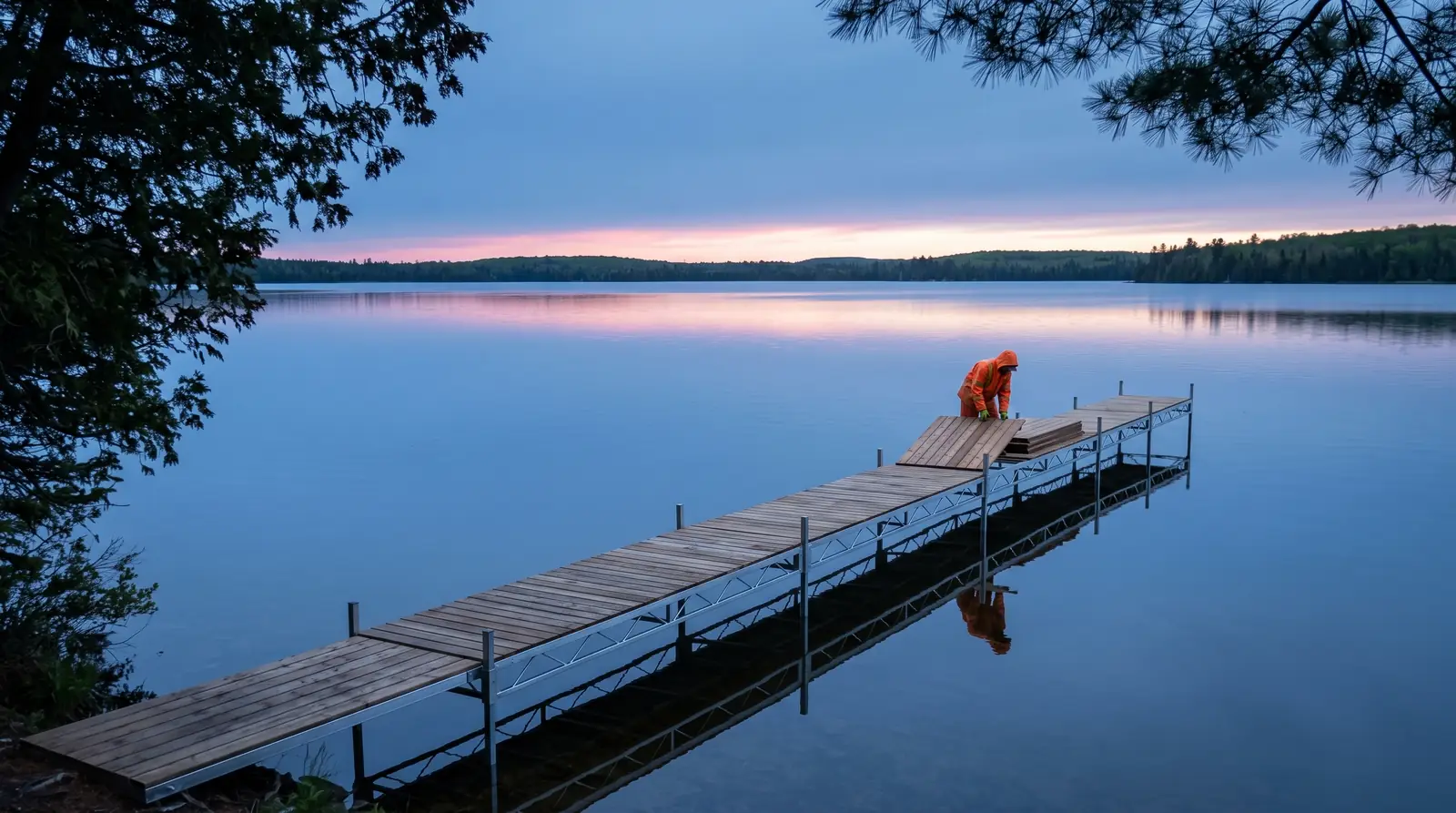 Fall dock removalSections, legs and hardware pulled, labelled and stored above the ice line so spring goes back fast.
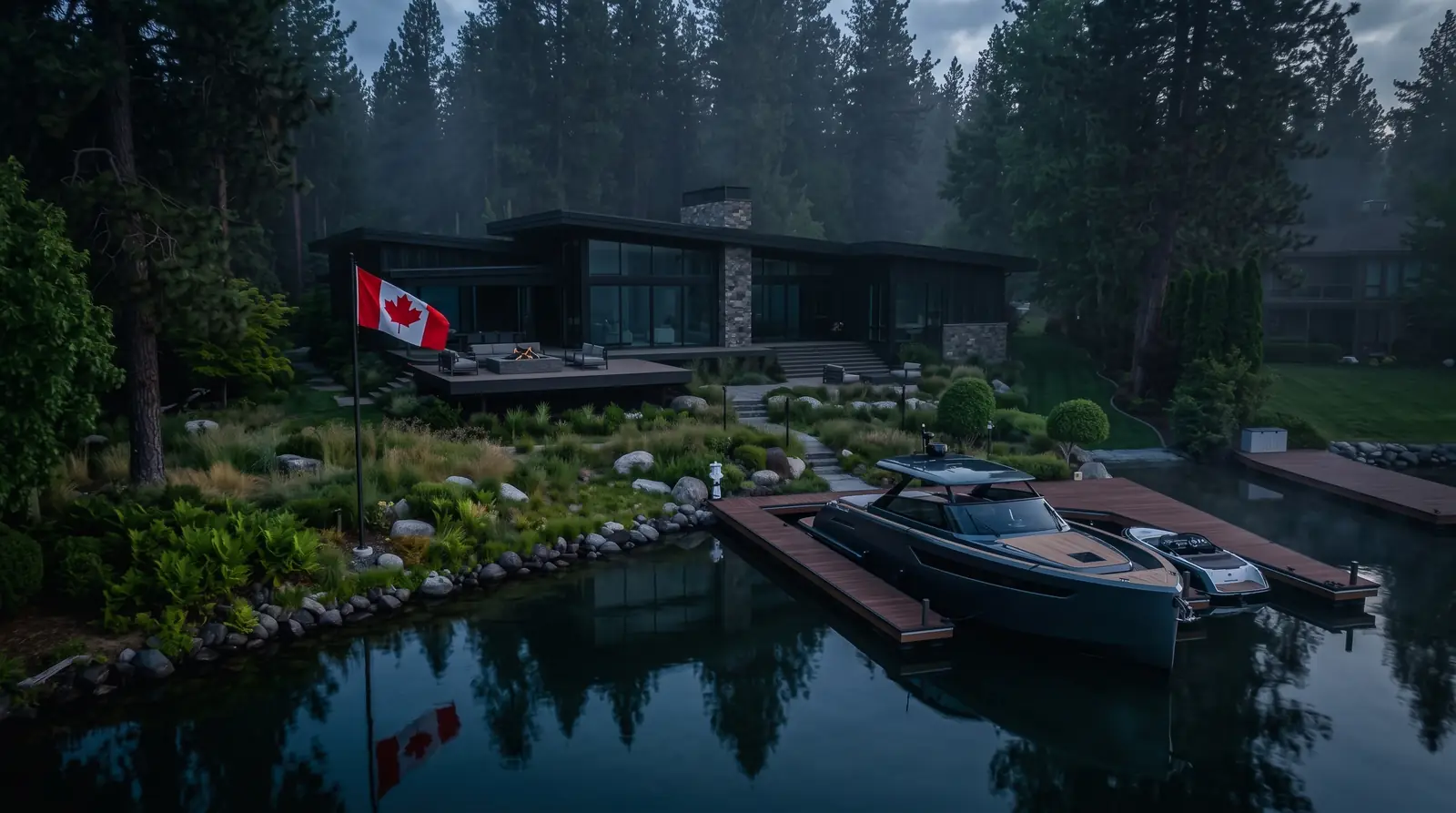 Boat lifts & PWC liftsLift removal and install timed with your dock, so everything comes out together.
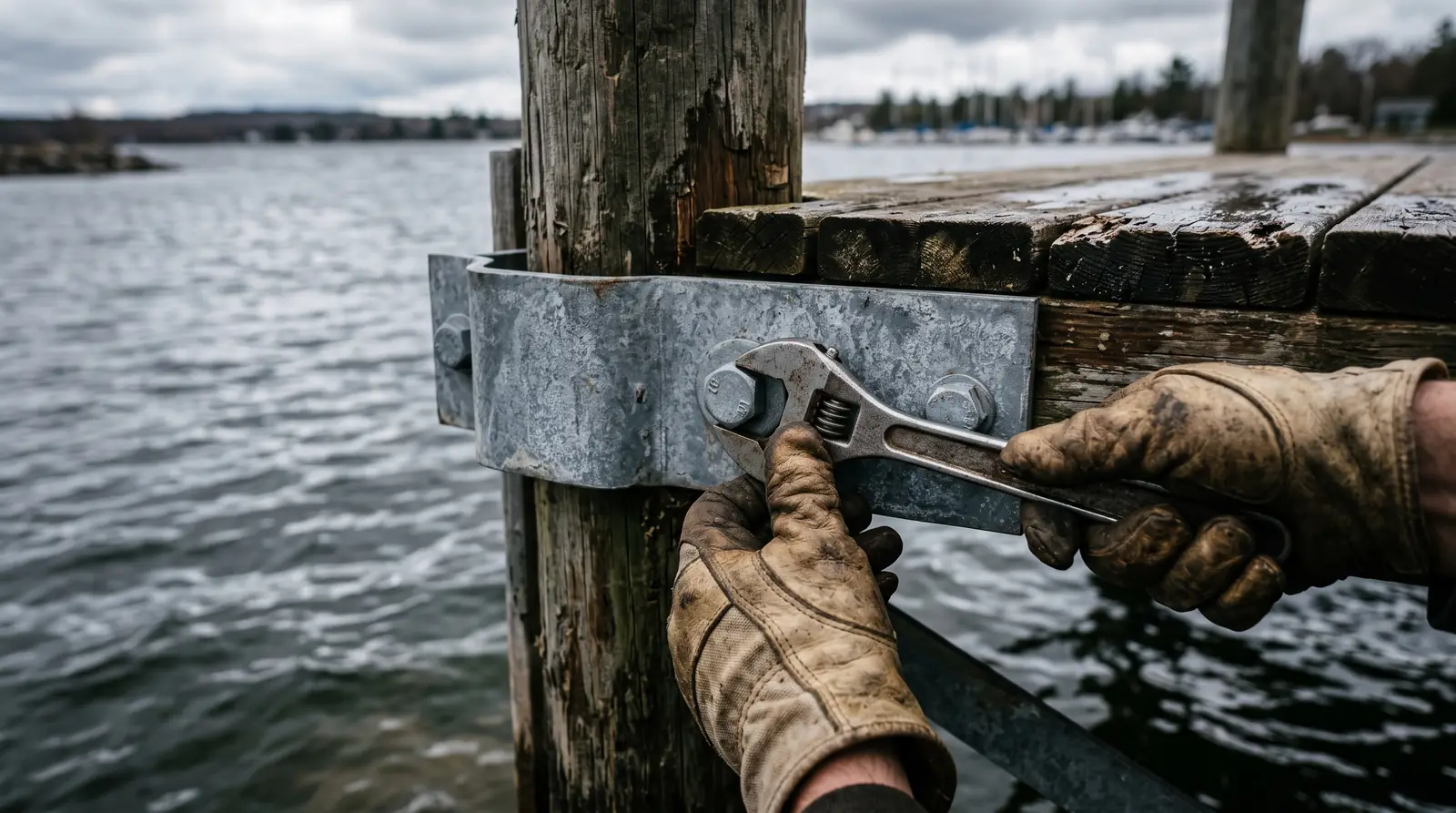 Dock repairLoose brackets, rotten boards, bent legs and storm damage fixed before they get worse.