The day your dock comes out of the water is the best chance all year to see what shape it is really in. Every section is up on shore, dry and easy to reach, and nobody needs to wade in to look at a bracket. A short inspection now tells you whether spring is a simple reinstall or a repair job, and gives you all winter to plan for it.
Why inspect in the fall, not the spring
Most people look at their dock in May, on the day it is supposed to go back in. That is the worst time to find a cracked frame. Repair parts and lumber can take time to arrive, and every dock company on Midland Bay and Penetang Bay is busy with installs at the same moment.
Inspecting in the fall turns surprises into a plan:
- You can book dock repair over the winter, before the spring rush
- You have time to decide whether to fix old sections or replace them
- Damage found now can’t get worse unnoticed under snow and ice
- You can store damaged pieces separately so nobody uses them by mistake
If your dock is still in the water, see dock removal first. The inspection works best right after sections come out, while you can still remember which piece sat where.
Before you start
Lay the sections out on level ground in the order they were installed, from shore out. Take a quick photo of each one. Number them with a paint pen or tape if they aren’t marked already. That alone makes spring installation smoother.
Wear gloves. Old decking hides splinters and exposed screws, and aluminum edges can be sharp.
The fall dock inspection checklist
Work through each section in the same order every time, top to bottom.
Frames and structure
The frame is what holds everything together, so start there.
- Wood frames: push a screwdriver into the stringers and joists, especially at the ends and where they touch the water line. Soft, punky wood means rot.
- Aluminum frames: look for cracked welds, bent members and corrosion where aluminum touches steel hardware.
- Steel frames: check for rust that flakes or leaves holes, not just surface staining.
- Sight down each section. A twisted or sagging frame usually means a weak joint somewhere.
Decking
Decking takes the most wear from sun, feet and freeze-thaw.
- Loose or popped boards and screws standing proud of the surface
- Split or cupped boards that could trip someone
- Composite decking with cracks near the fasteners
- Gaps that have opened up so wide a heel can catch
Loose boards are usually a simple fix. Lots of soft or split boards across one section can point to a frame problem underneath.
Hardware, brackets and connectors
Small parts fail first, and they are the easiest to miss.
- Corner brackets and hinges between sections: bent, cracked or worn holes
- Bolts that are rusted, stretched or missing their nuts
- Leg pockets and post sleeves: cracked castings, stripped set screws
- Ramp hinges at the shore end, which take a lot of twisting
Make a list of every bracket or bolt that needs replacing. Hardware is cheap compared to the damage a failed connector can cause in a summer storm.
Legs, posts and pads
Pipe or post docks sit on legs that take a beating from waves and ice.
- Bent or kinked legs
- Worn or missing foot pads, which let legs sink into soft bottom
- Seized adjusting collars that will make spring levelling a struggle
Spray seized collars with penetrating oil now and work them loose, while the dock is dry.
Floats and floating sections
If you have a floating dock or float-supported sections, check every float.
- Cracks, punctures or soft spots in the shells
- Floats that feel heavy or slosh, which means they have taken on water
- Loose or corroded float mounting hardware
- Sections that sat lower in the water this summer than the rest
A float that has taken on water won’t fix itself, and it gets heavier every season.
Boat lift
If a lift came out with the dock, give it its own look.
- Cables: fraying, kinks or broken strands
- Winch: smooth turning, no grinding or slipping
- Bunks and pads: worn carpet, loose bolts
- Frame and legs: bends, cracked welds
Cables with broken strands should be replaced before the lift carries a boat again. Lift questions also belong on the list when you book spring installation.
Sorting what you find
Put everything you find into one of three groups.
| What you find | What it usually means |
|---|---|
| Loose screws, a few popped boards, worn pads | Simple maintenance. Can often wait for spring prep. |
| Cracked brackets, bent legs, soft spots in one area | Repair job. Book it over the winter. |
| Widespread rot, cracked welds in several places, many failing floats | Consider replacing sections, or the whole dock. |
There is no fixed age at which a dock has to be replaced. A well-built aluminum dock can last a very long time, while a wood dock that has sat in the water every year may need sections replaced much sooner. The question is whether repairs keep adding up.
Repair or upgrade?
If you are already looking at a long repair list, it is worth asking whether some of that money is better spent on a change. Common dock upgrades include:
- Swapping worn wood decking for composite or aluminum
- Replacing tired sections with lighter ones that are easier to remove each fall
- Adding a wider section or platform where the family actually sits
- Changing to a design that suits your water depth and bottom better
In places like Tay Township, where many cottages sit on shallow, quiet bays, a dock that suits the bottom matters as much as the decking. On the deeper, busier water of Penetang Bay, wave action and boat wake put more stress on connectors and legs.
Storing a damaged dock over winter
Even sections that need repair should be stored properly.
- Keep everything above the high-water and ice line
- Raise wood sections off the ground on blocks so air can move underneath
- Don’t stack heavy sections on top of damaged ones
- Mark damaged sections clearly so nobody installs them by mistake in spring
- Keep loose hardware in a labelled bucket or bin, not on the ground
When to book repairs
The quiet months are the best time to arrange repair work. Book in the late fall or over the winter, and mention exactly what you found, with your photos. That lets a provider order parts ahead and slot your job in before spring installation starts. For local details, see the pages for Midland, Penetanguishene and Tay Township.
Quick answers
What should I check when my dock comes out for the winter?
Check the frame for rot, cracks and bends, the decking for loose or split boards, every bracket and bolt, the legs and foot pads, any floats, and your boat lift cables and winch. Take a photo of each section so you have a record.
Is it better to repair a dock in the fall or the spring?
Inspect in the fall and book the repair over the winter. Waiting until spring means competing with every installation on the bay and risking a late start to your season.
How do I know if my dock needs replacing instead of repairing?
If you find widespread rot, cracked welds in several places or many failing floats, replacing sections often makes more sense than patching. A few loose boards or one bent bracket are normal repairs.
Related services
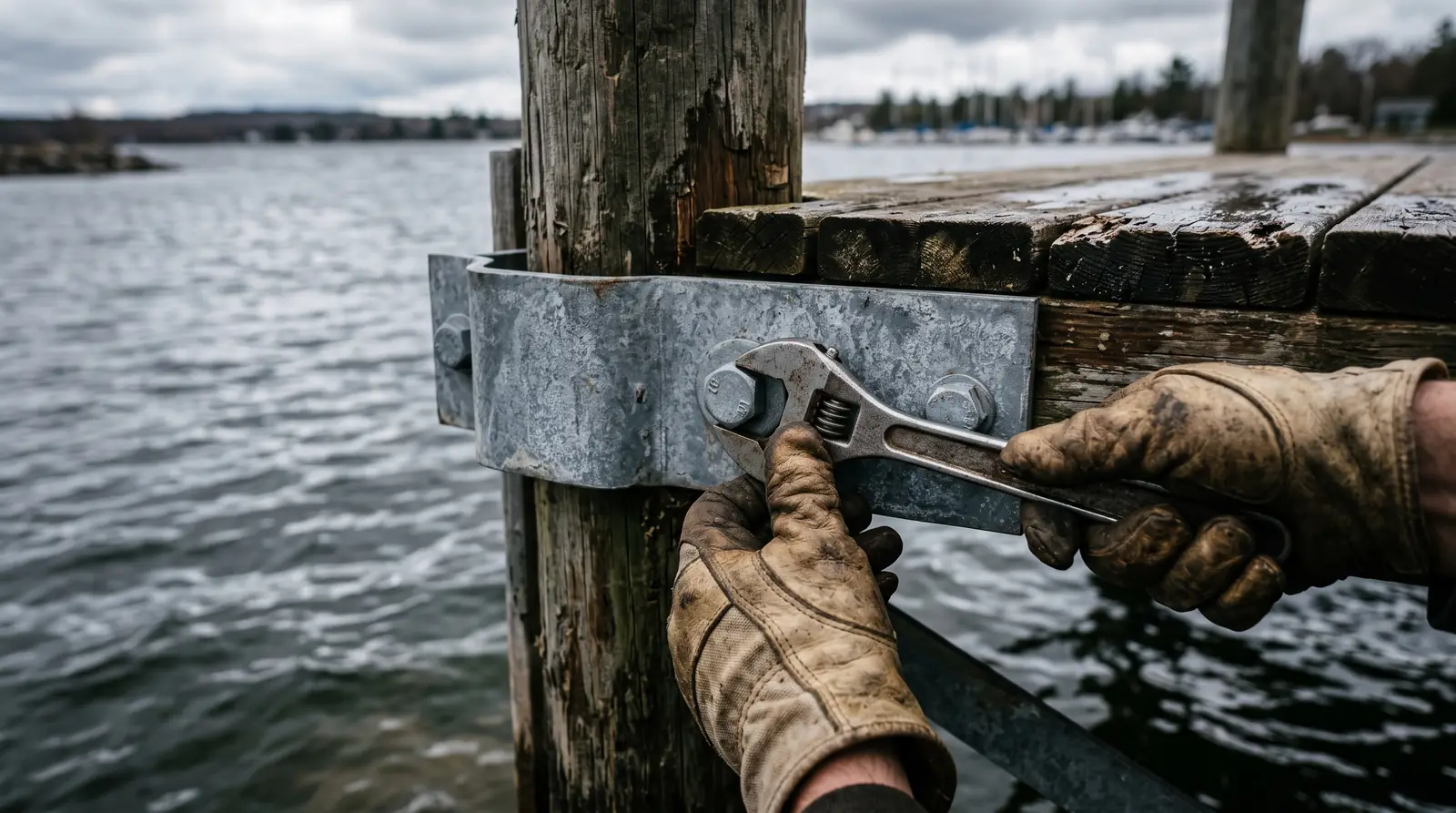 Dock repairLoose brackets, rotten boards, bent legs and storm damage fixed before they get worse.
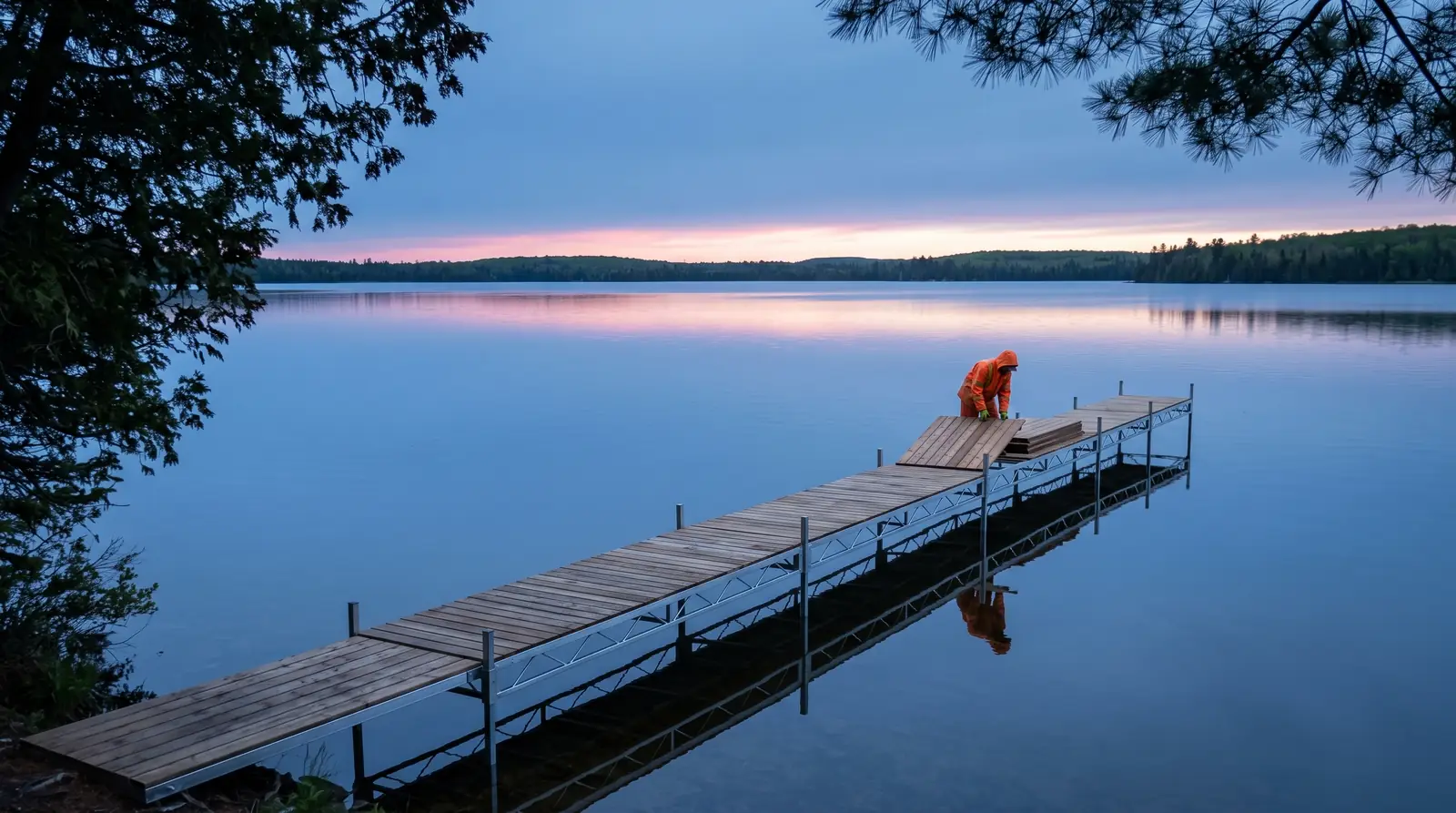 Fall dock removalSections, legs and hardware pulled, labelled and stored above the ice line so spring goes back fast.
 Waterfront upgradesNew decking, ladders, bumpers and cleats to make an older dock feel new.